
17 August 2026
Planned vs Reactive Maintenance in HVAC: The False Economy of Running to Failure
There is a version of facilities management that looks disciplined on paper. No unnecessary spend, no contractor on site unless something has actually gone wrong, maintenance budgets kept lean. It is a model built on the assumption that equipment will tell you when it needs attention.
It will. Usually at the worst possible time.
Running HVAC assets to failure is one of the most persistent false economies in building management. The logic feels sound until you look at what reactive-only maintenance actually costs – not just the repair bill, but everything around it.
The real cost of a breakdown
When a chiller fails in the middle of summer or a heating system goes down in January, the direct repair cost is rarely the biggest number on the invoice. Add engineer call-out rates at short notice, parts sourced urgently rather than through planned procurement, and the knock-on cost of building downtime – lost productivity, failed SLAs, or in critical environments, something far more serious – and the bill looks very different.
Reactive repairs on neglected equipment also tend to be more complex. A component that might have been identified and replaced during a routine inspection becomes a cascading failure when it finally gives way. What was a £300 part becomes a £3,000 repair.
Lifecycle and efficiency
HVAC equipment that runs without regular attention degrades quietly. Filters block, refrigerant levels drift, heat exchangers scale up, belt drives wear. None of these trigger an alarm. All of them reduce efficiency – meaning the system works harder, uses more energy, and reaches the end of its serviceable life earlier than it should.
A well-structured PPM programme does not just prevent breakdowns. It protects the asset. Equipment that is properly maintained runs closer to its design efficiency, costs less to operate year on year, and lasts longer before capital replacement is needed. For any organisation managing a building with significant mechanical plant, that is a material difference in lifecycle cost.
Compliance is not optional
For businesses operating under service level agreements, in regulated environments, or in buildings subject to the Building Safety Act and associated fire and ventilation requirements, reactive-only maintenance carries another risk entirely. Compliance obligations do not pause because a system has not yet failed. Inadequate maintenance records, missed inspection intervals, and undocumented remedial work create liability that no reactive repair can retrospectively fix.
A planned maintenance programme creates a documented service history. That matters to insurers, to auditors, and increasingly to the clients and tenants who expect proof of due diligence rather than a verbal assurance.
What good looks like
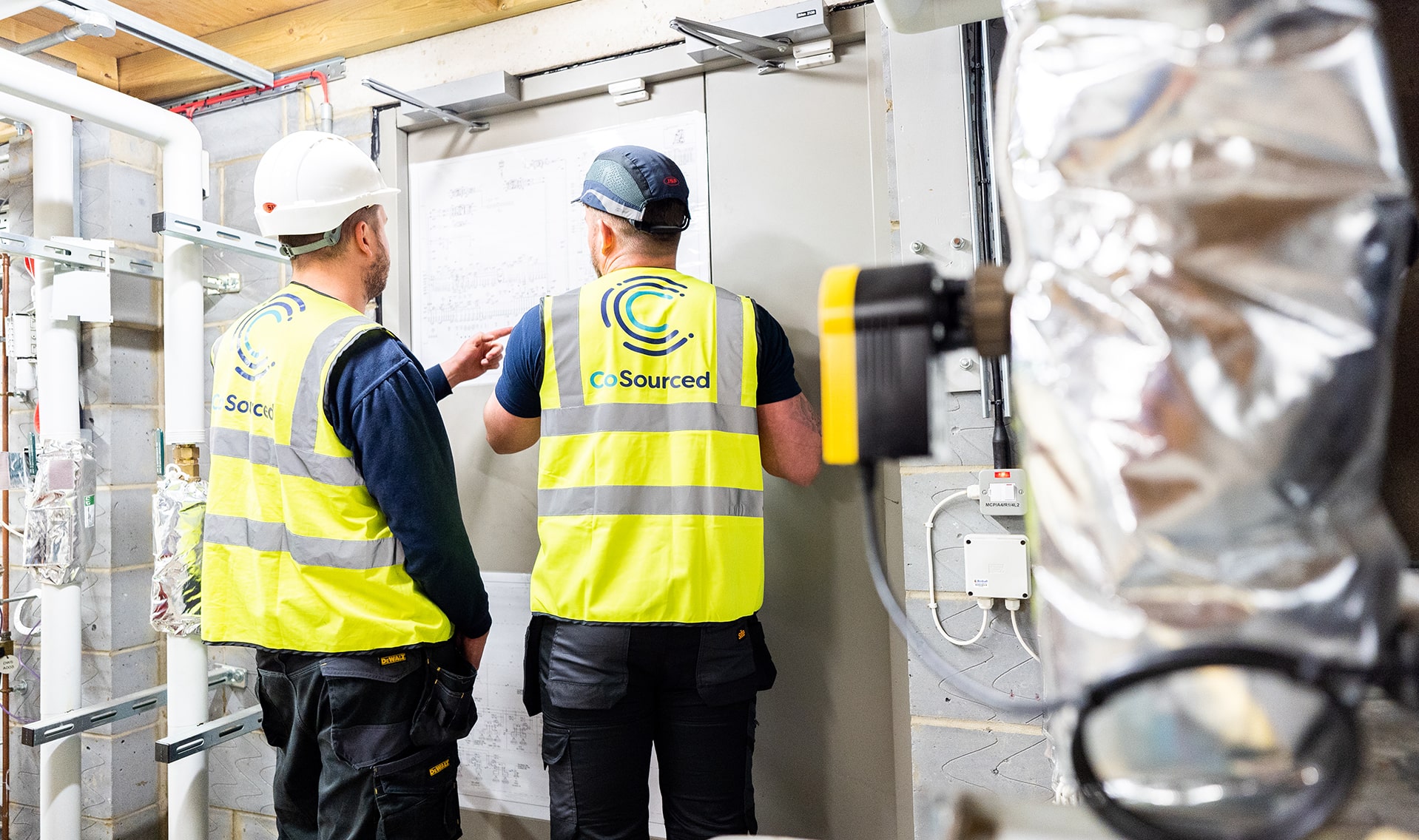
A properly structured PPM contract should be built around the specific assets on site, not a generic schedule. It should include defined visit frequencies, clear scope for each inspection, and a process for logging and actioning identified defects before they become failures. Reactive cover sits alongside it – not instead of it – for the genuine emergencies that planned maintenance cannot eliminate entirely.
The businesses that manage their estates best are not the ones that spend the least on maintenance. They are the ones that spend it in the right place at the right time, and have the records to prove it.
Talk to CoSourced
CoSourced provides planned and reactive mechanical maintenance services to commercial and multi-site customers across the UK. Our PPM programmes are built around your assets and your compliance obligations – not a one-size-fits-all schedule – and are backed by a nationwide team of specialist engineers with the capacity to respond when reactive cover is needed.
If you are currently running on a reactive-only basis, or if your existing maintenance contract is not delivering the structure and documentation your estate requires, we would welcome a conversation.
Get in touch with the CoSourced team to discuss a maintenance programme built around your buildings.